A garage door spring hardly ever stops working without warning. The difficulty is that most individuals do not identify the caution until the door is already stuck halfway open, slamming shut, or rejecting to relocate in any way. By that factor, what could have been an organized service telephone call becomes an immediate safety concern, often at the worst possible time, early in the morning, late at night, or during a hectic workday.
If you have ever before heard a loud fracture from the garage and assumed something fell off a shelf, there is a likelihood a spring release. I have seen home owners invest hours fixing the garage door opener, replacing batteries, resetting limits, and monitoring breakers, when the actual issue was a used spring that had actually just gotten to the end of its cycle life. A spring does the heavy lifting. The opener only guides the door. Once the spring weakens or damages, the entire system heads out of balance.
Knowing when to schedule a garage door spring replacement comes down to a mix of timing, noticeable condition, door habits, and danger tolerance. The very best time is normally before the spring breaks totally, not after. That appears apparent, but it takes a little context to know what "before" truly looks like.
Why the springtime matters greater than most people realize
Garage doors are deceptively heavy. A typical dual door can evaluate a couple hundred extra pounds, and strong timber or shielded industrial models can weigh a lot more. Springs counterbalance that weight so the door can be lifted smoothly by hand or with a garage door opener. When the spring is doing its task, the door really feels controlled and relatively light. When it is not, every various other part of the system begins working harder.
That consists of the opener, rollers, joints, wires, and tracks. In property garage door repair, this pattern shows up all the time. A property owner calls because the opener is stressing, the remote reaction is inconsistent, or the door turns around for no evident reason. The source typically becomes a springtime that is fatigued and no longer balancing the door correctly. The opener is not failing initially. It is compensating for a problem elsewhere.
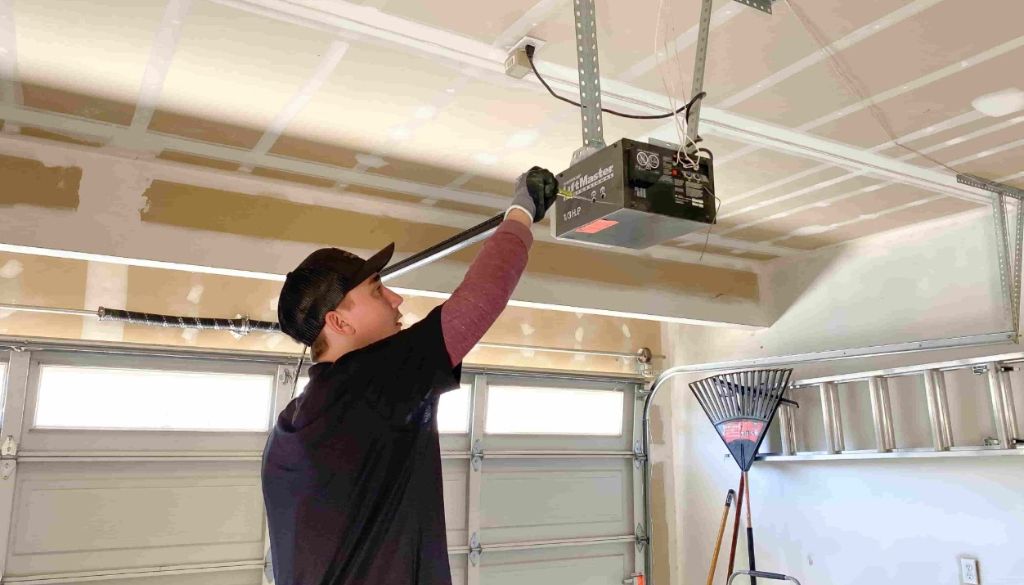
In business garage door repair, the stakes can be even greater. A packing bay door with a worn out springtime can interrupt distributions, develop downtime, and position a real risk to personnel. Businesses normally comprehend the cost of emergency situation failing much better than property owners do, which is why many commercial properties schedule solution based upon wear and cycle count as opposed to awaiting a breakdown.
The clearest signs that replacement should be scheduled soon
You do not need to be a professional to detect much of the common red flags. Some are evident, others are refined, however they tend to appear in patterns.
- The door really feels heavier than it made use of to, specifically if you disengage the opener and attempt to lift it manually. The door opens a few inches and quits, or it begins to close and afterwards reverses. You hear loud standing out, squeaking, or a sudden bang from the garage. The springtime reveals visible gaps, stretching, corrosion accumulation, or deformation. The opener stress, jerks, or appears to be doing more job than normal.
A single symptom does not constantly suggest the spring has to be replaced that day, but 2 or 3 together normally warrant a solution phone call. A door that has come to be noticeably much heavier is just one of the strongest indications. Springs use slowly, so home owners typically adapt without understanding it. They press a little more challenging, hold the wall switch a little bit much longer, or stop vehicle parking inside due to the fact that the door is "breaking down." Those are not typical changes. They are indications the system is befalling of balance.
The timing question most homeowners ask
The practical variation of the question is not just "when do springtimes break?" It is "when should I act if the door still works?" That is where experience matters.
If the spring is undamaged but the door is moving erratically, making brand-new sounds, or placing tension on the opener, schedule substitute soon, preferably within days as opposed to weeks. If a springtime is noticeably broken, separated, or broken, quit making use of the door and schedule service instantly. If the door is hanging crooked or one side is less than the various other, there may be a cord concern tied to the springtime failure, which changes the safety and security picture.
Springs do not usually improve with time. Once they are put on, they continue to lose tension. Temperature level swings can make the behavior extra visible. Cold weather usually exposes a weak springtime due to the fact that steel agreements and lubricants enlarge, so a marginal system that worked in moderate weather condition can begin stopping working in winter.
I have likewise seen doors act improperly throughout humid periods, especially when corrosion has been silently creating on the springtime coils. Rust raises rubbing and can reduce the lifespan of the spring. If the springtime has visible rust and the door is currently revealing indicators of discrepancy, waiting hardly ever saves money. More frequently, it boosts the probabilities of extra damage to the opener or hardware.
How long garage door springtimes normally last
Most torsion springtimes are ranked by cycle life. One cycle is one complete opening and one full closing of the garage door. Criterion springs are often rated around 10,000 cycles, though higher-cycle choices are available. What that implies in real life depends on exactly how typically the door is used.
A home that opens up and shuts the garage door 4 times a day might obtain approximately 7 years from a conventional springtime, offer or take. A busy family members utilizing it eight times a day may reduce that life expectancy virtually in half. Include climate, maintenance habits, door weight, and installment high quality, and the precise timeline can differ a lot.
That is why age matters, but only as part of the photo. If your springtimes are eight to ten years old and the door is your major entry factor, replacement comes to be a positive conversation even if you have actually not had a total failure yet. If they are just three years of ages however the door was improperly stabilized during garage door installation, the springtimes might already be under abnormal stress.
When a client tells me, "The door still opens up, but it appears harsh and seems heavier than in 2015," and the springtimes are already well into their expected service life, that is typically the right time to arrange garage door spring substitute. It is much more controlled, easier, and typically cheaper than waiting on an emergency.
Broken spring versus weak spring
A broken springtime normally makes the decision for you. The door will not open properly, or it may closed at all. On a torsion spring system, you can typically see a clear void where the spring has actually broken. On expansion springtime systems, the springtime may hang or show up overstretched. Either way, the repair is urgent.
A weak spring is trickier due to the fact that the door might still work. That is where people postpone too long. They think that if the door moves, the issue is small. However a weak spring can harm the opener in time, particularly if the opener is compensating for added weight every day. A garage door opener is developed to relocate a balanced door, not deadlift an out of balance one.
You can think of a weak spring like a tire with a sluggish leakage. It is still technically functional, however every mile raises the possibilities of a larger trouble. For homeowners, that may indicate getting caught inside on a hurried early morning. For a service, it might indicate an unusable service entryway throughout running hours.
Why replacing both springs often makes sense
Many double garage doors make use of a set of springtimes. When one breaks, the other might still be undamaged, however it has typically experienced the same variety of cycles and similar wear. Replacing only the failed spring can get the door working again, but it often leaves an older springtime in place that is not far behind.
This is one of those judgment calls that relies on age and problem. If the springtimes were installed with each other and one has actually fallen short after years of service, changing both is often the smarter option. The expense difference is usually much more workable than paying for 2 separate sees, and the door will be balanced a lot more continually. It additionally decreases the chance of a 2nd failing in the near future.
On the various other hand, if one springtime was changed just recently and the various other is still healthy, a service technician may recommend replacing just the fallen short part. The point is not to sell more parts. It is to match the repair work method to the real wear pattern.
The seasonal home window people overlook
Many homeowners wait till the door stops working, yet there are far better seasonal windows for preventative solution. Early loss is a great time because temperature drops often tend to reveal equilibrium problems, and organizing is often much easier prior to winter season weather drives up emergency situation phone calls. Spring can also be a practical time, specifically if the garage has gone through a cold season with little maintenance.
If you are currently preparing domestic garage door repair, changing aging springtimes before a difficult winter season or before a busy summer season travel period is generally sensible. Families rely greatly on the garage when institution schedules, sports gear, bikes, lawn tools, and vacation storage space are done in movement. A spring failing never really feels well timed, but it is particularly turbulent when the garage works as the home's primary entrance.
For business properties, the timing should follow usage patterns greater than the schedule. If a center has a door that cycles dozens of times a day, springtime substitute must be tracked with solution records and expected before peak failure risk.
What happens if you wait also long
The most instant risk is safety. A failing springtime can trigger the door to drop faster than expected or ended up being unforeseeable moving. That matters whether the door is over a vehicle, near a youngster, or part of a workplace with foot traffic.
There is likewise the tools price. A having a hard time springtime can reduce the life of the garage door opener, battle royal cable televisions, wear out rollers, and throw the door out of placement. What could have been a simple spring replacement can develop into a larger garage door repair including multiple components.
The hassle can be even worse than the costs. A caught vehicle, a door stuck open overnight, or an impaired loading entrance develops pressure that leads individuals to make rushed decisions. Emergency situation service has its place, however planned service usually offers you much better options.
I have actually seen home owners try to keep a weak spring passing readjusting opener pressure settings. That is same day garage door services Southport not a solution. It simply conceals the signs and symptom while increasing wear elsewhere. If the door equilibrium is off, the spring system requires attention, not a stronger press from the motor.
Repair or replacement of the whole door?
Sometimes springtime substitute is all that is required. Various other times, it makes sense to step back and ask whether the entire door system is nearing the end of its valuable life.
If the panels remain in good shape, the tracks are sound, and the opener is dependable, replacing the springs is generally the right move. It brings back safe operation without the price of a complete garage door installation. But if the door is older, inadequately protected, nicked, rusting, or mismatched with the home's demands, spring failure can be the moment to take into consideration a broader upgrade.
That comes up usually in older homes where the door is undersized, noisy, or hard on the opener even after fixings. A new door with the right springtime system, proper balancing, and a suitable garage door opener can drastically improve performance and decrease persisting solution calls. Still, not every aging door needs substitute. A solid service technician must have the ability to tell you whether the springtimes are the main issue or whether they become part of a bigger decline.
What to do the day you suspect springtime failure
The safest response is generally easy, and restriction matters more than improvisation.
- Stop running the door if it is snagging, slamming, or rejecting to lift normally. Keep people free from the opening, especially kids and pets. Do not draw the emergency release unless you recognize the door's weight and position. Avoid trying to change or wind the springs yourself. Call a certified garage door repair specialist and describe what changed.
That suggestions may appear cautious, yet it is gained care. Springs shop substantial energy, and the tools and training required to handle them securely are not optional. Lots of home owners are comfortable with basic maintenance, such as lubricating rollers or altering remote batteries, however spring job falls under a various category.
If the garage is your only method to move an automobile, clarify that when you call. Many service business prioritize doors that are trapping an auto inside or leaving the home unsecured.
The do-it-yourself temptation
A great deal of property owners are capable and useful, and many home repair services are worth finding out. Garage door spring substitute is not one I delicately suggest as a DIY project. The danger is not hypothetical. Wrong winding, poor device control, wrong springtime sizing, or unprotected equipment can trigger extreme injury and significant residential or commercial property damage.
Even past safety and security, sizing issues. Springs require to be matched to the door's weight, elevation, and track arrangement. A springtime that is also strong or as well weak can create a various collection of problems, consisting of inadequate equilibrium, opener stress, and early wear. I have seen doors with fresh springtimes that still would not remain halfway open due to the fact that the incorrect parts were mounted. The homeowner had actually conserved the service charge just to pay for adjustment afterward.
A specialist must check the entire system during the repair service, not just swap springs. That consists of cable televisions, bearings, facility brackets, drums, rollers, and opener settings. A door that damaged a springtime may additionally have hidden wear elsewhere.
Questions worth asking before you schedule
The high quality of the substitute matters almost as long as the timing. Not all spring work are equal. If you are setting up service, ask what cycle ranking the brand-new springs will have, whether both springtimes must be changed, whether the door will certainly be fully balanced after setup, and whether the service technician will certainly examine relevant hardware.
For a home with constant garage usage, upgrading to higher-cycle springtimes can be a wise long-lasting choice. The upfront distinction is commonly moderate compared to the trouble of one more replacement a couple of years down the road. For services, that calculation is even clearer, given that downtime is expensive.
It is also worth asking whether the opener settings will be tested after the springs are installed. A properly well balanced door should relocate smoothly, and the opener ought to not seem like it is laboring. If the system was straining before, the change after repair work must be noticeable.
A practical guideline of thumb
If your garage door spring is broken, noticeably damaged, terribly rusted, or causing the door to come to be hefty and unpredictable, routine replacement right now. If the springtimes are several years right into routine use and the door is your main accessibility point, do not await failure to require the issue. Positive substitute is generally the more secure and a lot more affordable move.
That is specifically real when the very first indicators are refined. A slower lift. A louder opener. A door that no longer feels balanced by hand. Those are typically the small warnings that appear weeks or months prior to a full break. Taking notice of them can save you an emergency situation call, prevent civilian casualties, and maintain a daily benefit from ending up being an actual disruption.
Garage doors are very easy to ignore when they function. Springs ensure they work. When they begin telling you they are worn out, it deserves listening.