A garage door can look basic from the driveway, however any person who has functioned around one recognizes far better. It is among the heaviest moving systems in the majority of structures, and the springtimes do the effort that makes a 150 to 300 pound door really feel convenient. When those springs begin to stop working, the indication usually appear before the break. The problem is that several homeowners and even some building managers miss out on those early ideas, or they put them off since the door still opens up "well enough."
That hold-up can obtain pricey quick. I have actually seen a door limp along for weeks with a weakening springtime, only to take out an opener, bend a track, and leave an automobile entraped inside the garage on a Monday morning. I have actually also seen industrial doors come down erratically because one spring shed tension, which put stress on rollers, hinges, and the operator. In both residential garage door repair and commercial garage door repair, spring issues rarely remain separated for long.
Understanding what the springs are telling you issues. Garage door spring substitute is not just one more maintenance thing. It is a safety issue, an integrity problem, and in most cases, a way to stay clear of a much bigger repair service bill.
Why springs matter greater than many people realize
The garage door opener does not really lift the full weight of the door on its own. The opener overviews and controls motion. The springtimes give the counterbalance. When the springtime system is functioning properly, the door must really feel remarkably light when separated from the opener. When the springtimes are put on, out of balance, or damaged, the opener is suddenly asked to do a job it was never ever implied to take care of alone.
There are two springtime systems many people encounter. Torsion springtimes rest over the door opening on a shaft and store energy by twisting. Extension springs run along the straight tracks and stretch as the door steps. Torsion systems are a lot more common on more recent installs due to the fact that they often tend to operate more smoothly and offer far better control. Extension systems still exist, especially on older doors and spending plan setups.
Both kinds wear out. Springs are ranked in cycles, and one cycle implies the door rises and comes back down. A standard spring may last around 10,000 cycles, though that number can differ based on top quality, environment, use, and door weight. In a household that opens the garage 4 to six times a day, a spring can wear much sooner than individuals expect. In an active industrial setting, the timeline can diminish dramatically.
The earliest signs are commonly subtle
Most springtime failures do not start with a remarkable bang, though that can happen when a spring ultimately breaks. Regularly, the door starts behaving in a different way. The modifications are tiny at first. The door might appear somewhat heavier. It may wait a minute before relocating. You may hear a new noise and disregard it since the door still operates.
Those are the minutes to pay attention.
A correctly balanced garage door should relocate with a regulated, almost simple and easy feeling. When that really feel modifications, the springtime system is worthy of a closer look. In many garage door repair calls, the consumer initially noticed something was "a little off" 2 or 3 weeks previously. That detail matters due to the fact that it generally means the spring was weakening, not simply arbitrarily failing out of nowhere.
Five warning signs you should never ignore
- The door feels hefty when you lift it manually, especially if it made use of to move easily. The door opens a couple of inches and quits, or reverses unexpectedly. You listen to loud creaking, standing out, or a sharp bang from the garage. The door looks jagged, jerky, or irregular as it moves. There is a visible gap in a torsion springtime, or extended, tired-looking extension springs.
That list covers the most common red flags, yet every one is entitled to context.
When the door all of a sudden really feels too heavy
This is one of the clearest indications that a springtime is no longer carrying its share of the load. If you draw the emergency situation release and attempt to lift the door by hand, it ought to not fight you. It needs to hug waistline height if the balance is close to deal with. If it slams down or takes real effort to elevate, stop there. That is not simply a hassle. It suggests the counterbalance system is compromised.
People frequently assume the garage door opener is failing when the actual problem is the springtime. The opener may stress, hum loudly, or relocate the door slowly, however that can be a signs and symptom, not the cause. Changing the opener first is a typical misdiagnosis. I have seen flawlessly excellent garage door opener systems worn out since they were compelled to drag a dead-weight door for also long.
Loud sounds are not typical wear and tear
Garage doors are never ever silent, but there is a distinction in between regular operating sound and an audio that tells you something mechanical has transformed. A sharp bang from the garage can be the noise of a torsion spring breaking. Lots of people describe it as sounding like a firecracker or a board breaking. If that takes place, do not keep trying the door.
Creaking and popping can likewise signify problem prior to a break happens. Those audios might originate from springs under stress and anxiety, hardware shifting since stress is unequal, or bearings and brackets reacting to a lots they were not seeing in the past. Noise alone does not verify that springtime replacement is required, yet sound paired with heavy motion or imbalance is a strong indicator.
In coastal or moist climates, corrosion adds another layer. Corrosion does more than make springs look old. It boosts rubbing between coils and weakens the steel over time. A rusty spring typically seems harsh before it fails.
An uneven or jerky door is a severe red flag
A garage door should take a trip in a relatively smooth line. If one side increases faster than the various other, if the bottom side looks angled, or if the door shudders as it relocates, the springtime system may be erratically tensioned or partly stopped working. Occasionally a cord issue is included as well, yet springs are often at the origin of the problem.
This is where damages can spread quickly. Irregular motion puts stress and anxiety on course, rollers, joints, and panels. On a shielded steel door, that can suggest panel splits or distortion. On a wood door, it can imply warping and equipment pull-out. On industrial sectional doors, the tons inequality can wear through components fast, especially under frequent use.
If a door is visibly crooked, do not compel it. That is how cords embark on drums, rollers pop free, and doors obtain obstructed halfway open.
The opener starts acting strange
Modern openers have security features that discover resistance. When springs are failing, the opener might translate the extra weight or drag as a blockage. The outcome can resemble an electrical issue. The door starts down, then reverses. It obtains partway up and quits. The motor seems strained. The rail might shudder more than usual.
Homeowners in some cases begin adjusting opener pressure setups to "solve" the problem. That is generally the incorrect move. Raising pressure to make up for a springtime issue can produce a safety risk and shorten the life of the opener. If the door balance is incorrect, the spring trouble requires to be resolved first.
This is one reason great service technicians inspect the door by hand prior to criticizing the electric motor. In both garage door repair and garage door setup work, balance precedes. The opener is only as reputable as the door system it is affixed to.
Visible springtime damage is enough reason to call
You do not require a remarkable failing to validate solution. If you can see a tidy space in a torsion springtime, that springtime is broken. If expansion springs show up stretched out, extended, or no longer balanced, they are likely put on past risk-free use. If there is hefty corrosion, fraying cable televisions nearby, or loosened mounting equipment around the springtime setting up, the system requires professional inspection.
One detail lots of people miss is that springs must normally be replaced as a pair on a two-spring system. If one breaks, the various other has normally gone through a comparable number of cycles and is stone's throw behind. Replacing just one might look cheaper in the minute, but it frequently leads to another service call right after, plus a door that is tougher to stabilize properly.
Why putting it off obtains expensive
A used springtime can damage more than itself. The opener is the very first element that often tends to suffer since it starts doing way too much training. Then you might see frayed wires, bent shafts, worn bearings, split joints, misaligned tracks, or harmed rollers. If the door comes down hard, panel sections can divide or twist. Those repair services add up quickly.
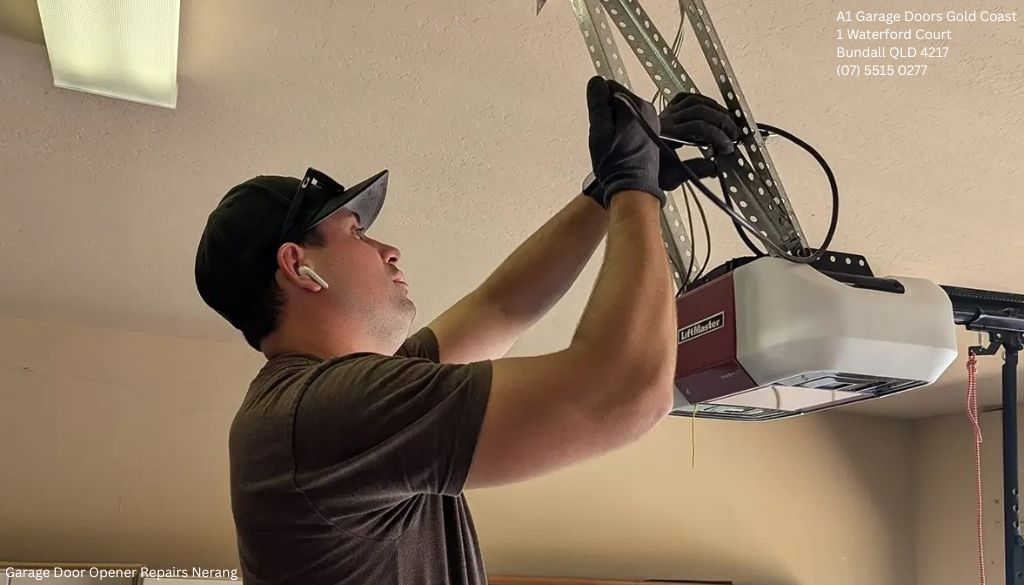
The indirect prices matter too. A stuck garage door can thwart a workday, delay deliveries, leave supply exposed, or catch a lorry inside. In a commercial setting, a nonworking overhead door can interrupt staffing, safety, and access simultaneously. For homeowners, the inconvenience is typically paired with a safety concern, especially when the door is iced up in the open position.
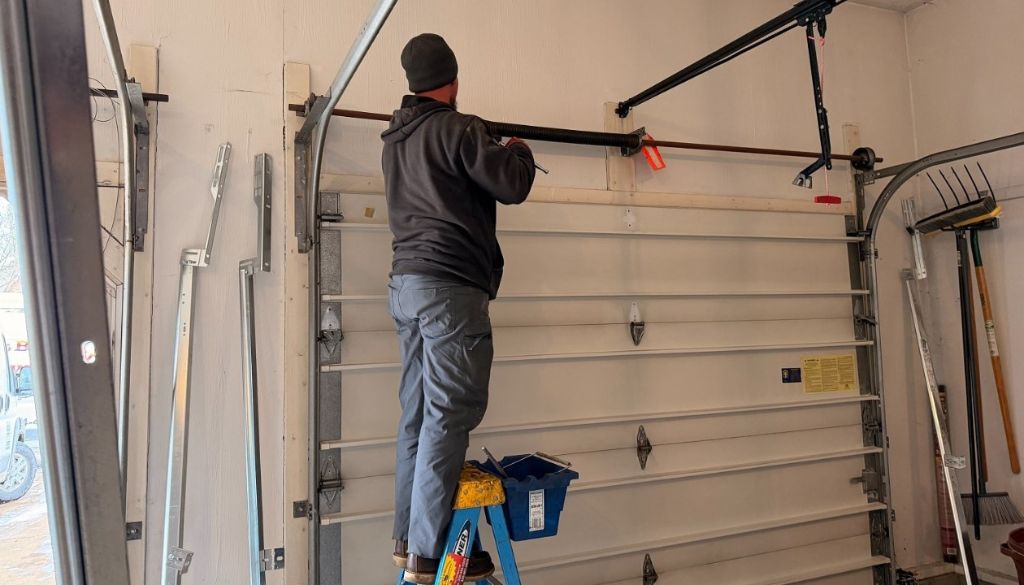
I keep in mind a solution phone call at a tiny car store where the proprietor had ignored a struggling door for almost a month. The springtime had weakened sufficient that the operator maintained compensating until the drive elements put on down. What started as a spring replacement became a bigger business garage door repair involving the driver, cable televisions, and track modification. The last cost was a number of times what an earlier repair would certainly have been.
Residential and industrial indication are not always identical
The core signs and symptoms coincide, however the context modifications. In homes, the very early indicators frequently show up as trouble. The door obtains loud, the opener battles, or the family members notices the door is difficult to raise throughout a power interruption. In industrial properties, the problem might offer as slower cycle times, unequal closure, or enhanced endure high-use hardware.
Commercial doors are often bigger, larger, and used far more frequently. That indicates springs can get to end-of-life much faster than owners expect. A stockroom door that cycles loads of times a day does not age like a residential door that opens a few times each early morning 24/7 garage door repair services and evening. Therefore, set up evaluation is not optional in many commercial environments. It is fundamental threat management.
Why spring replacement is not a laid-back DIY project
There are plenty of home upkeep tasks that compensate a mindful do-it-yourself technique. Garage door spring replacement is usually not one of them. Springs shop significant power. Launching or applying that stress improperly can cause serious injury. Torsion systems are especially unforgiving if the wrong devices are utilized or if winding bars slide. Expansion systems lug their very own threats, specifically when security cable televisions are missing out on or damaged.
The web makes tough tasks look simple because videos compress time and remove the repercussions. What you do not see are the doors that were left unbalanced, the drums that were mis-set, or the braces that were loosened up at the incorrect moment. A springtime job is not practically switching components. It is about matching the spring to the door weight, setting proper stress, examining wire condition, verifying balance, and validating that the opener setups are still appropriate.
That job takes judgment, not simply instructions.
What a proper solution go to ought to include
A genuine springtime substitute service must exceed eliminating the broken part and mounting a brand-new one. At minimum, the service technician must examine the entire lifting system since springs do not operate in isolation.
- Confirm the appropriate spring dimension and cycle score for the door's weight and usage Inspect cables, drums, bearings, rollers, hinges, and center support hardware Balance the door manually and test opener operation after tension is set Lubricate suitable relocating components and note wear that might require future attention Explain whether both springs should be changed and why
That sort of visit prevents callbacks and secures the rest of the system. It additionally provides the property owner a more clear picture of what condition the door is really in.
The best springtime is not just the springtime that fits
This is one location where experience matters. A spring can look close enough in dimension and still be wrong for the door. If the cable size, inside diameter, size, or cycle rating are not matched properly, the door might practically open up, however it will certainly not balance properly. That can cause short opener life, harsh traveling, and early wear.
The same problem shows up after a garage door installment. If the door has actually been updated from a lighter non-insulated version to a heavier insulated steel door, the original springs might no longer be suitable. The door could work for a while, but strain turns up ultimately. Whenever there is a significant equipment change, spring choice should be evaluated as component of the overall setup.
Maintenance can assist, however it will not quit aging
Lubrication, regular inspection, and routine balance checks can prolong the beneficial life of springs and aid catch indication early. They can not make a fatigued springtime brand-new once again. Steel under repeated load ultimately breaks. The goal of maintenance is not to stay clear of replacement for life. It is to get a full, secure life span and reduce the odds of collateral damage.
For homeowners, a basic practice aids. Every couple of months, view the door open and close without diversions. Pay attention to it. Look at whether it relocates level. Notice whether the opener appears various. If there is a hand-operated release and you understand just how to utilize it safely, examination the balance just when the door is totally closed and conditions are regulated. If anything feels incorrect, stop and arrange service.
For business residential properties, log cycle counts preferably, or at the very least track solution intervals. Heavy-use doors gain from intended maintenance since wear patterns appear long before a total failure.
How to make a decision whether it is urgent
If the door is still relocating, individuals usually ask whether they can wait a few days. Occasionally the response is indeed, but the risk depends on the symptoms. A noticeably busted springtime, a jagged door, a door that will certainly not stay open, or an opener that is clearly straining ought to be dealt with as urgent. A little added noise on an or else smooth, balanced door might enable a timely but not emergency appointment. The obstacle is that lots of people undervalue what they are seeing.
A good policy is simple. If the door's weight, equilibrium, or placement appears altered, do not maintain biking it to see what occurs. That screening is what transforms a springtime problem right into a multi-part repair.
The bottom line on alerting signs
Garage door spring replacement is just one of those fixings where timing issues. Early activity generally means a cleaner repair, lower price, and much less disruption. Waiting commonly means more tension on the opener, even more endure equipment, and a better possibility of an unexpected failing at the most awful feasible moment.
The signs are seldom mystical. A heavy door, loud noises, uneven traveling, opener strain, and noticeable springtime damage are all telling you the same thing: the door is no longer safely well balanced. Whether you are managing a household home, a loading bay, a service shop, or a storage facility, those warnings are worthy of punctual attention.
Good garage door repair is not practically obtaining the door moving once more. It has to do with restoring secure operation, matching the right parts to the system, and making sure the next cycle is as regulated as the last one should have been. When springtimes start chatting, it pays to listen early.