A garage door can weigh anywhere from roughly 130 extra pounds for a tiny shielded steel door to more than 300 pounds for a huge timber or industrial assembly. That weight is workable just due to the fact that the springtime system does the actual lifting. When a springtime breaks, loses tension, or is readjusted incorrectly, the door stops behaving like a balanced machine and begins acting like a blunt pressure hazard.
Property proprietors usually discover the trouble when the door all of a sudden feels hefty, the garage door opener pressures, or the door rises a few inches and bangs closed. Then, many individuals begin searching for garage door repair suggestions and ask yourself whether spring work is a reasonable do it on your own task. After years around domestic garage door repair and commercial garage door repair calls, my sight is basic: spring substitute is entitled to a high level of care, and for the majority of owners it belongs in professional hands.
That does not imply homeowner need to stay ignorant. The most safe customers I work with are the ones who understand what the springs do, identify the warning signs early, safeguard the area correctly, and understand when to stop. Profundity protects against injuries, protects the door system, and frequently keeps a small repair from turning into a complete garage door installation.
Why springtime replacement is various from various other garage door work
Many garage door tasks are fairly low danger. Replacing remote batteries, cleaning picture eyes, lubing rollers, or resetting a garage door opener after a power failure generally comes under the regular maintenance group. Spring substitute is not routine maintenance.
A torsion spring or extension spring shops a considerable quantity of mechanical energy. That energy is what counteracts the door. If it is launched in a regulated way, the door functions smoothly. If it is launched unexpectedly because of a slipped winding bar, an unsuccessful bracket, a bad collection screw, or an improvisated device, parts can relocate with adequate force to damage fingers, lacerate hands, damage lorries, and in extreme cases cause life transforming injuries.
The threat is not restricted to the springtime itself. Once the counterbalance is gone, the door becomes unsteady. A separated opener trolley, a frayed cord, or a tilted base section can produce a domino effect. I have seen a property owner remove a spring only to discover the door was no longer sustained uniformly, causing one side to go down and turn the whole assembly. What started as a spring concern turned into curved tracks, damaged panels, and a substitute quote far more than the original repair.
Know which kind of springtime system you have
Most homeowner have either systems: torsion springtimes installed on a shaft above the door opening, or extension springtimes that stretch along the straight tracks. Torsion systems prevail on more recent doors and generally supply smoother procedure and longer cycle life. Expansion systems are still located on several older homes and light obligation applications.
The safety considerations vary. Torsion springs lug torque around a shaft and are wound under tension using certain bars. Expansion springtimes stretch and contract, and they need to always have control cable televisions running through them. If an extension springtime breaks without a safety cable television, it can whip throughout the garage like a steel slingshot.
For bigger structures, rolling steel and sectional expenses doors in business setups frequently use heavier torsion settings up, several springtimes, jackshaft operators, and specialty equipment. Business garage door repair can involve greater cycle springs, bigger drums, and doors that are just not forgiving when messed up. A storage facility owner who is comfortable changing a rest on a shed door should not assume the exact same confidence relates to a full size filling bay door.
The indication that deserve instant attention
Springs hardly ever Have a peek here fail without leaving clues. Some clues are apparent, others are refined sufficient that owners ignore them until the day the door will certainly not open.
Here are five indications that ought to relocate the concern to the top of your maintenance listing:
The garage door really feels abnormally heavy when lifted manually. The opener battles, jerks, or stops before the door reaches complete height. You listen to a loud snap from the garage, often referred to as a gunshot or firecracker. The door increases unevenly, or one side appears to drag the other. There is a noticeable gap in a torsion spring, or an expansion springtime looks stretched out and tired.That loud breeze matters. More than when, a consumer has informed me they heard a bang in the garage in the evening and assumed a rack had fallen. The next morning the door would certainly not open. In most cases, that noise was a torsion spring breaking easily in two. The noticeable space is the giveaway.
The first safety and security action is not touching the spring
When a springtime has fallen short or is believed to be falling short, the smartest first step is to stop using the door up until you recognize the situation. That indicates no repetitive opener cycles to "see if it clears itself." A battling opener can wear out the electric motor, strip equipments, or bend the leading section of the door. I have changed more than one garage door opener that passed away because it was compelled to do a springtime's job.
If the door is closed, leave it closed preferably. A shut door is generally the most secure placement. If the door is stuck open, protecting the opening ends up being the top priority. Maintain individuals away, particularly children, and do not walk underneath the door while try out controls. If a springtime, cord, or drum has fallen short, the door may not stay up.
Disconnect power to the opener if there is a risk somebody else may activate it. In common residential properties, that step is usually forgotten. I have seen occupants struck a wall surface switch while a proprietor was inspecting the springtime, producing an extremely dangerous surprise.
Personal protective equipment aids, but it does not get rid of the risk
Gloves, eye protection, and tough shoes are reasonable around garage doors. Safety glasses protect versus rust flakes, metal burrs, and particles from torn wires. Handwear covers can minimize cuts from sharp track edges and cable strands. Excellent footwear matter if a tool or bracket drops.
Still, safety equipment must not create false self-confidence. Handwear covers do not quit a winding bar from slipping. Shatterproof glass do not make it safe to loosen an established screw on a packed torsion cone without proper positioning and devices. The very best safety and security tools in spring work is managed method, appropriate hardware, and the judgment to ask for professional garage door repair when the task exceeds your experience.
Why improvised tools are a severe mistake
One of the a lot more troubling patterns in spring accidents is the use of whatever happens to be close-by: screwdrivers instead of winding bars, locking pliers on worn equipment, dissimilar outlets, or a ladder that rocks on an unequal slab. Improvisation around saved spring power is a negative bargain.
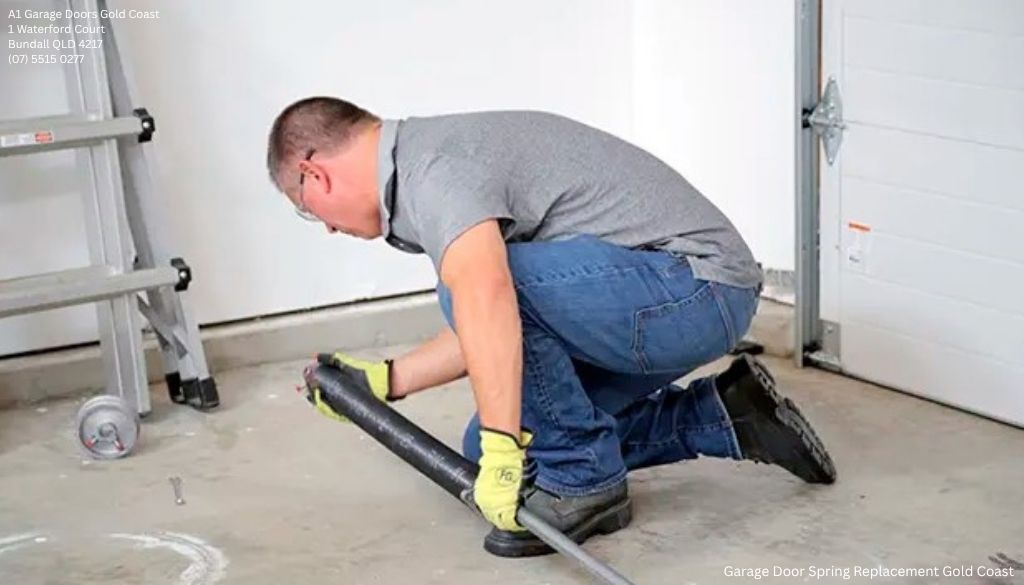
Proper torsion work commonly requires solid steel winding bars of the correct diameter and size, plus clamps, properly sized wrenches, a steady ladder, and enough space to function without twisting your body into unpleasant placements. Even with the right devices, the worker must comprehend the amount of transforms a springtime needs to lug, exactly how to determine left wind and ideal wind springs, and exactly how to protect the shaft and tracks before making adjustments.
The same logic applies to expansion systems. If the pulleys are worn, the cables are frayed, or the safety cable is missing, changing just the springtime may not recover secure operation. This is one factor experienced service technicians check the full counterbalance assembly instead of exchanging one component and leaving old failure factors in place.
The surprise risk of the "simply one broken spring" mindset
On a 2 spring torsion system, owners occasionally notice just one damaged springtime and assume changing that single spring suffices. Often it operates in the short term. Frequently it creates an additional problem.
Springs use by cycles. If one springtime has reached the end of its service life, the friend springtime has usually seen the same number of cycles. Installing one brand-new springtime beside one exhausted springtime can leave the door erratically well balanced. The opener might make up for a while, but the older springtime often fails right after. That suggests an additional solution call, one more period of downtime, and extra wear on cords, drums, and the opener.
A balanced door should lift smoothly and hug mid travel when separated from the opener. Attaining that equilibrium is part of secure Garage door spring replacement. It is not only regarding getting the door to open. It is about recovering the system so the opener overviews the door as opposed to dragging dead weight.
Property owner actions that are usually safe
There is a valuable happy medium between doing nothing and trying the full repair work yourself. Owners can take several actions that boost security and provide a specialist far better info when they arrive.
- Keep the door out of service and protect against anybody from using the opener. Look from a distance for a spring gap, loose cable, bent track, or hanging pulley. Take clear images of both spring ends, the facility brace, cable televisions, and opener arm. Move automobiles out just if you can do so without running an unsteady door. Write down the door size, product, and any kind of labels on the springtime or opener.
That picture habit saves time. A tech can often distinguish a few excellent photos whether the door utilizes torsion or extension springs, whether the wires are endangered, and whether the opener bracket has begun to tear from the top area. It likewise helps determine when a previous garage door setup utilized nonstandard hardware.
When a door have to be opened up before service arrives
This is among the trickiest scenarios for homeowner. An automobile is trapped inside, the springtime has actually stopped working, and the temptation is to force the door up. Sometimes a door can be raised manually by 2 solid grownups if the opener is disengaged and the path is clear. Often that is a terrible idea.
The threat depends on the door weight, whether one or both springtimes have failed, whether the cords are still seated on the drums, and whether the door sections remain in good shape. If a cable television has actually leapt a drum or an expansion spring has broken unevenly, lifting the door can create it to rack in the tracks and jam hard. If you are under the door when that happens, your margin for mistake disappears.
If unlocking is unavoidable, move slowly, utilize enough aid, keep hands away from pinch factors, and safeguard the door in the open setting with correct clamps on the tracks once it is elevated. Never depend on the opener or your own hold alone to hold it. Also then, this is a last resource, not conventional method. In a lot of cases it is more secure and less expensive to wait for solution than to take the chance of a loss or create track damage.
Special worries in service, multi system, and industrial properties
Owners of rental homes and business structures have a wider obligation. It is not just your very own safety and security at risk. Renters, employees, vendors, and distribution drivers may utilize the door without understanding the caution signs.
For a solitary family members leasing, a door that really feels heavy or slams shut should be dealt with the same way as a malfunctioning stairway rail or damaged lock, as a problem requiring prompt attention. A renter might maintain running the door out of comfort, particularly if they rely upon automated access. That raises the possibility of opener failing or injury.
Commercial garage door repair calls frequently entail tighter routines and more web traffic around the opening. A solution bay or storage space center might need prompt accessibility, but rate needs to not bypass lockout and location control. Forklifts, pedestrians, and vehicles develop too many moving components for informal troubleshooting. If a business spring breaks, separate the door, tag it inactive, and generate a certified service technician with the right lifting equipment and substitute stock.
The partnership between springs and the garage door opener
A typical misunderstanding is that the opener raises the complete weight of the door. It does not, a minimum of not when the system is healthy. The spring counteracts the door, and the opener takes care of controlled movement. When springs are put on or damaged, the opener ends up being a reluctant substitute.
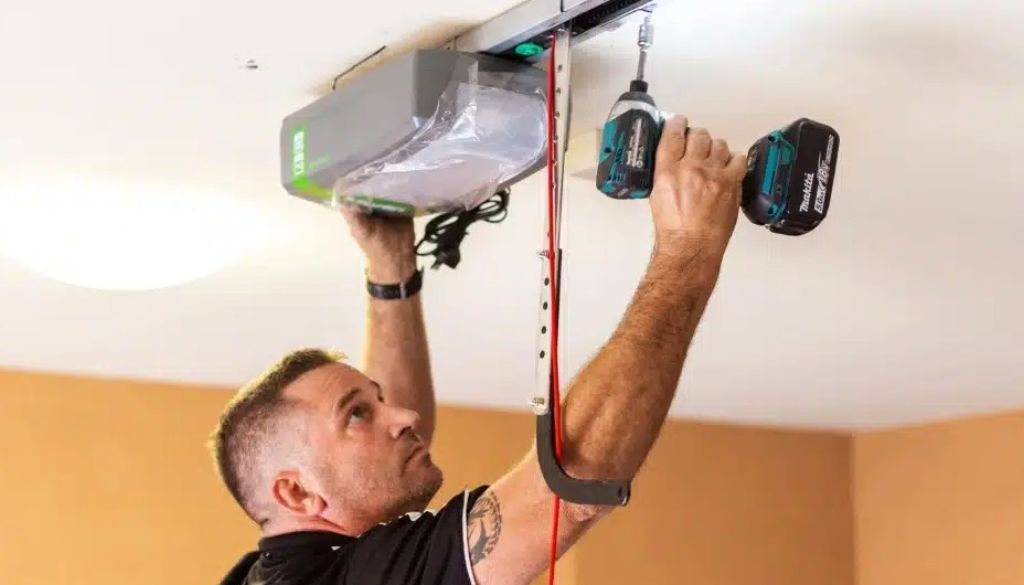
That is why a damaged spring typically appears first as an opener grievance. The wall button works periodically. The motor hums. The carriage takes a trip, but the door barely moves. House owners then presume they require a new garage door opener, when the actual issue is the counterbalance system.
There are situations where both are true. An opener that has actually been hauling an unbalanced door for months may have removed internal equipments, overheated, or bent the rail link at the top area. During household garage door repair, an excellent professional checks the opener after springtime replacement to make sure it is still running within regular force setups and travel limitations. Changing the springtime without rectifying the opener can leave the system unreliable.
How professionals approach spring replacement safely
Professional springtime work is not risk-free since technicians are courageous. It is more secure because the process is disciplined. The door is identified correctly, the springtime dimension is matched to the door weight and height, the hardware is evaluated as a system, and the workplace is controlled.
An experienced specialist will normally verify the door balance, examine the shaft, drums, center bearing, end bearing plates, hinges, rollers, and cable televisions, after that mount springs with the proper wind and torque. Afterward, the door is checked by hand before the opener is reconnected. If the door does not hold near mid traveling or drifts noticeably, the equilibrium is corrected prior to the task is considered complete.
That process matters since the wrong spring can produce an incorrect sense of success. An also strong springtime can make the door shoot upwards and strain the opener on the way down. An also weak springtime leaves the opener doing too much work and can reduce its life. Appropriate Garage door spring replacement is as much about calibration as it is about swapping parts.
A couple of judgment calls that save cash and trouble
Not every old door is worthy of significant springtime work. Often the wisest selection is a broader reset. If the bottom panel is rotted, the track is bent, the sections are fracturing around the hinges, and the opener is nearing completion of its life, pouring money right into piecemeal fixing may not be functional. Because situation, a full garage door installation can provide better worth, quieter operation, improved insulation, and upgraded safety and security features.
On the other hand, lots of doors with a damaged spring are otherwise healthy and just need high quality springs, fresh wires, and a tune up. I have seen twenty years of age sectional doors go back to smooth service because the proprietor dealt with the problem early rather than running the opener until whatever else failed.
The trick is reviewing the entire system, not fixating on the loudest symptom.
Questions to ask prior to employing a repair company
A trustworthy business need to be comfortable talking about spring kind, cycle score, service warranty terms, and whether both springtimes must be changed on a 2 springtime system. They must likewise describe if additional parts are put on and why those parts matter.
Ask whether the technician will stabilize the door by hand after installation. Ask whether the quote includes labor, disposal of old springs, and opener change if required. If the door is commercial, ask whether the technology has experience with that particular door design and operator configuration.
Price matters, yet springtime work is not an asset. Really reduced prices in some cases indicates thin cycle springs, reused equipment, or hurried change. A a little greater invoice for appropriate sizing and mindful arrangement is usually more affordable over the life of the door.
The profits for owners
Garage doors are familiar, which makes them simple to ignore. The spring system hides its threat in ordinary sight. That is why so many injuries happen during moments of confidence as opposed to minutes of panic. A person sees a metal coil, a few brackets, and a cord, and assumes patience suffices. Typically it is not.
The most safe approach starts with acknowledgment. If the door is hefty, loud, crooked, or opener dependent, stop treating it as a convenience thing and begin treating it as tools under load. Safeguard the location, prevent improvisated repair work, and get a skilled collection of eyes on the full system.
For proprietors who manage homes, rentals, stores, or stockrooms, this is not simply a fixing issue. It becomes part of accountable building care. Done properly, Garage door spring substitute restores safe procedure, protects the garage door opener, and prevents avoidable damages to the door itself. Done thoughtlessly, it can transform a manageable solution call into an emergency.
A well balanced garage door ought to relocate with unexpected simplicity. If yours does not, listen to what it is informing you.